



Most people don’t fail at fat loss because they lack willpower. They fail because they’re following advice built for losing weight, not losing fat. There’s a difference, and if nobody’s ever explained it to you, there’s a good chance you’ve already lost muscle you worked hard for, without even realising it happened.
Here’s the truth: the scale doesn’t know what it’s weighing. It can’t tell fat from muscle, water from glycogen, progress from regression. So when you crash your calories and cut your training in half, the number drops and you assume you’re winning. Then you look in the mirror three months later, smaller but somehow softer, weaker in the gym, more tired than before, and you can’t work out what went wrong.
This is one of the most common and most avoidable mistakes in fitness. And it’s almost never a discipline problem. It’s a structure problem.
Why Most Fat Loss Plans Burn Muscle Too
Cut your calories too hard, skip resistance training, and your body doesn’t discriminate about where it pulls energy from. It’ll take it from wherever’s easiest, and muscle tissue is metabolically expensive to maintain, so in a steep deficit, it’s often first on the chopping block.
You end up technically “losing weight” while your metabolism slows down, your strength drops, your energy tanks, and your body composition actually gets worse, not better. You’re smaller. You’re not leaner. Those are not the same thing, even though they look identical on a scale.
This is the guy who’s been “dieting” on and off for years and still doesn’t look like he trains. He’s put in real effort, real restriction, real suffering, and the results don’t reflect any of it, because the approach was working against him the entire time.
The Two Things That Actually Determine the Outcome
Fat loss without muscle loss comes down to two competing signals your body is constantly reading: how much energy you’re giving it, and what you’re telling it to prioritise keeping. Get either one wrong, and the result shifts from “leaner” to “smaller.”
1. Stop Starving Yourself
A moderate calorie deficit, not a brutal one, gives your body room to lose fat gradually without cannibalising muscle for energy. Aggressive deficits feel productive because the number on the scale moves fast. But that speed is usually a warning sign, not a win. The faster the drop, the more likely a meaningful chunk of it is muscle, water, and metabolic capacity you’ll want back later.
A smaller, sustainable deficit is slower to show on the scale, but it protects the tissue you actually want to keep, which means what comes off tends to be fat, and what stays looks like someone who trains.
2. Protein Isn’t Optional
If you’re not eating enough protein, your body has little reason to hold onto muscle during a deficit. Protein isn’t a “nice to have” macro you top up if there’s room left in your calories, it’s the single biggest lever most people are quietly ignoring, and it makes more difference to how you look at the end of a cut than almost anything else you’ll read about.
This is often the single biggest gap between someone who cuts and comes out leaner, and someone who cuts and comes out just smaller.
3. Keep Lifting, Don’t Just Do Cardio
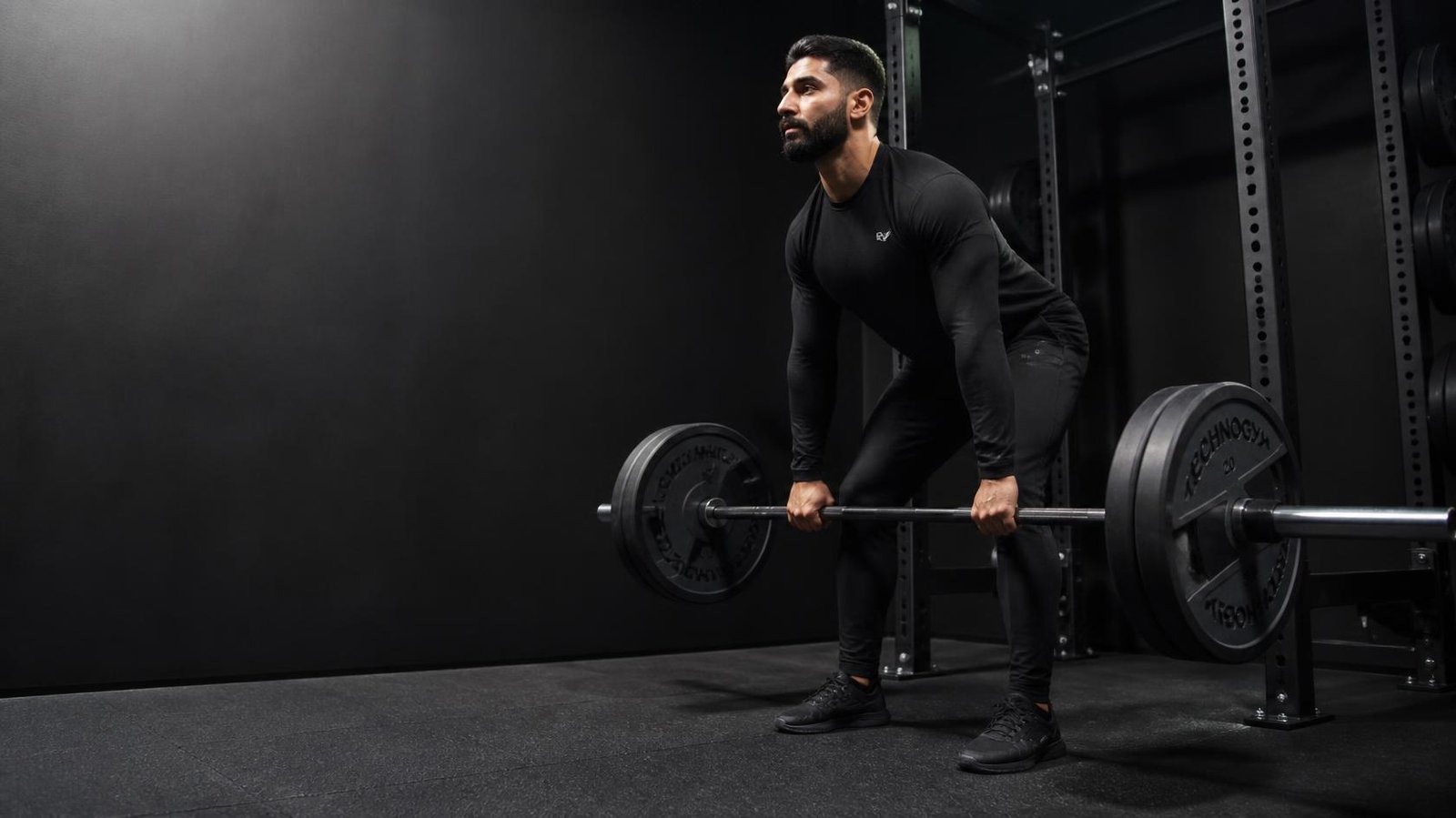
Cardio burns calories in the moment. Resistance training sends a completely different signal, it tells your body what to keep. If you stop lifting while cutting calories, or drop your training volume because you’re “focusing on cardio for fat loss,” you’re removing the exact stimulus that tells your body muscle is still needed.
The people who stay lean and muscular through a cut are almost always still training hard, still pushing weight, right up until the end. The cardio helps the deficit. The lifting protects the physique.
4. Sleep and Stress Matter More Than You Think
Under-recovered, over-stressed bodies hold onto fat more stubbornly and burn through muscle faster. Elevated stress hormones and poor sleep both work against the exact outcome you’re chasing, no matter how dialled in your food and training are. If you’re not sleeping properly, no diet plan will out-work that for long.
This is the piece most people skip entirely, because it doesn’t feel as controllable as food or training. But it’s not optional, it’s part of the same system.
5. Be Patient, Visible, Lasting Change Takes Structure, Not Shortcuts
There’s no honest version of this that happens in two weeks. Anyone promising a dramatic transformation in ten days is selling you something that either isn’t real, isn’t sustainable, or isn’t muscle you’re keeping. Real body recomposition, losing fat while holding or building muscle, takes consistent months, not a crash week before a holiday.
The Real Problem Isn’t Information, It’s Structure
If you’ve read this far and none of it is new to you, that’s the point. You’ve probably read all of this before, somewhere. The issue was never that you didn’t know protein matters or that lifting helps during a cut. The issue is nobody’s actually built you a plan where your training, your nutrition, and your recovery work together, adjusted to your schedule, your starting point, and your actual life, instead of a generic template that assumes everyone’s situation is the same.
That’s the real difference between reading advice and following a plan that works. Knowing you need protein isn’t the same as knowing exactly how much, adjusted weekly as your weight and training change. Knowing lifting matters isn’t the same as having a programme structured around preserving strength while calories drop.
Ibrahim’s coaching is built around exactly this, a personalised training and nutrition plan that accounts for where you’re actually starting from, not a copy-paste programme that ignores your job, your recovery, or your goals. Every number is set for you specifically, and reviewed weekly, so the plan adjusts as your body does instead of staying static while your circumstances change around it.
FAQs
Can I lose fat and build muscle at the same time?
If you’re new to training or returning after a long time off, yes, to a real degree. It gets harder the more advanced and lean you already are, but a well-structured plan with the right protein intake and training intensity can produce both outcomes simultaneously, especially in the early months.
How much protein do I actually need?
It depends on your bodyweight, training intensity, current body composition, and goals, there’s no single number that fits everyone despite what generic calculators suggest. A personalised plan accounts for this instead of guessing with a one-size-fits-all formula.
Will cardio make me lose muscle?
Cardio on its own won’t destroy your muscle. But relying heavily on cardio while neglecting resistance training, and under-eating protein at the same time, will accelerate muscle loss during a cut. It’s the combination that causes the damage, not cardio in isolation.
How long does it take to see results?
Real, lasting body composition change typically takes several months of consistent training and nutrition, not weeks. Anyone promising a dramatically different physique in 10 days isn’t giving you the full picture, and what they’re selling usually isn’t the kind of change that stays.
You don’t need another diet you’ll abandon in three weeks. You need a plan built specifically for you, with someone checking your progress every single week. Apply for coaching and let’s build it properly.